お知らせ
意外と知らない歯の動揺度
歯科に関係している人が毎日診査している歯の動揺度。
歯周病の分類もそうなのですが、歯の動揺度の診査項目は日本と海外で若干異なっています。
とはいってもそれで問題があるわけではないので心配なのですが、海外の文献を読んでる方は気を付けてください。
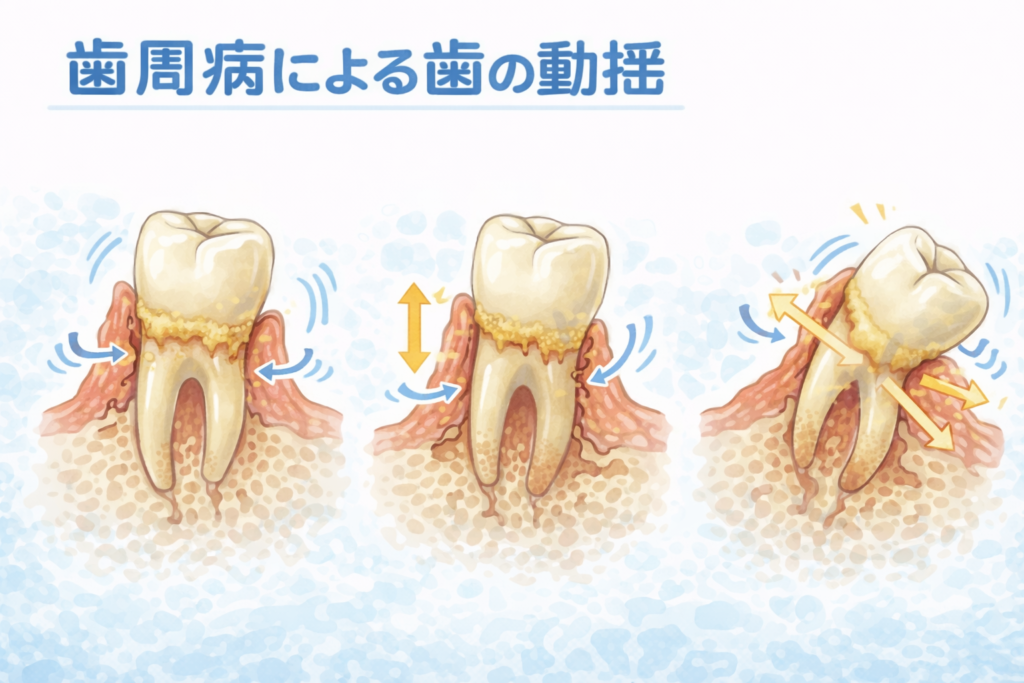
以下が、歯の動揺度を診査するミラーの動揺度についてです。
Classification of tooth mobility(T.M.) according to Miller (1950): Increased TM may be classified
• Degree 0: “physiologic” mobility measured at the crown level. The tooth shows the mobility of 0.1–0.2mm in the horizontal direction within the alveolus
動揺度0:「生理的」動揺。歯は歯槽骨内で水平方向に0.1~0.2mmの動揺を示す。
• Degree 1: increased mobility of the crown of the tooth of at the most 1mm in the horizontal direction 動揺度Ⅰ:1mm未満の水平的な揺れ
•Degree 2: visually increased mobility of the crown of the tooth exceeding 1mm in the horizontal direction
動揺度Ⅱ:動揺度が水平方向に1mmを超える
• Degree 3: severe mobility of the crown of the tooth in both horizontal and vertical directions, and impinging on the function of the tooth
動揺度Ⅲ:歯冠が水平方向と垂直方向の両方向に著しく動揺し、歯の機能に影響を及ぼす
本来は、歯が1㎜以上動いたら動揺度は2になります。
でも、日本では、1~2㎜で動揺度が2になります。
本来は文献では、0~1はほとんど動いていないということになります。
日本での動揺度の基準とやや異なりますので歯周病専門医を取得しようとしている先生はご注意ください。